← Academia · Versiunea în română
Translated from Romanian by Achiziții Corecte. The Romanian text is the reference version.
Liberation Day – (former) National Day of Romania – 23 August
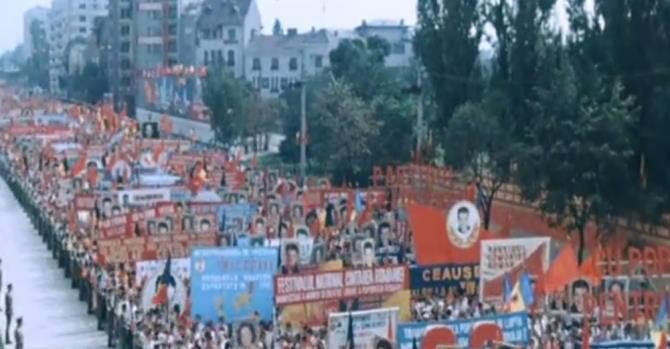
“To your great past, a great future”
“… Let us live as masters in our country, Builders of a new world …”
Centralisation vs Decentralisation!
I remember the times when all of Romania celebrated this day, 23 August.
Willing or Unwilling, but glad after the official bacchanalia, when everybody belonged to everybody: the elderly, at a “mic” and a beer; the younger ones, at a “mic” and a beer; the children played “țară-țară vrem ostași” (Red Rover) and negotiations were held, without any prior publication of any intention, as to who should hold hands with whom, so that the chain (not the supply chain, obviously) would be as unbreakable as possible.
Centralisation or DeCentralisation
Even in those days there were some who dealt with market studies – in the ’80s I heard of American marketing, which seemed to me a poor copy of the Romanian “market study”, which is what the people of that time did as part of the supply chain.
Philip Kotleri defined marketing as “a social and managerial process by which individuals or groups of individuals obtain what they need and want through creating, offering and exchanging products and services of a certain value”.
Put simply, marketing is “the art and science of selling”.
Later there was a science – Merchandise Science (Merceologia) – and a Specialist – the merchandise expert (merceologul), who dealt with the study of goods, establishing their quality and the conditions for storing them, the goods.
What were we celebrating (on 23 August)? Well, it depends; the children did not know and only heard heavy words from their elders: “historic day”, “the Axis”, “the Allies and the Entente”, “Russia”, “Germany”, “the Army”, “the King”, “the Marshal” … The young were taught at school that we (we, Romania!) had shortened the war by a few months and spared from death several thousand (tens of thousands) of people, who thus no longer took part in the theatre of war. The adults and their parents: a “mic” and a beer.
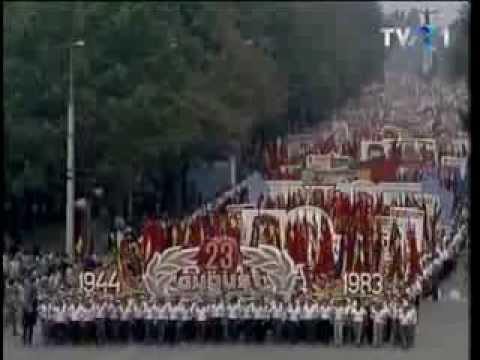
There were Parades, with little tricolour flags, with flags and placards, the biggest crush being at the flags for the “volun-must”ii, and everyone could hardly wait for the start of the end of the official parades, for the joy of beginning the unofficial party afterwards, exactly as in the joke:
- Young man, why aren’t you shouting Hurrah like everyone else here?
- Comrade party activist, I am hoarse, he whispered in a faint voice, but the hurrah I have here in my soul!
So, there was a statement of need (we must celebrate 23 August), a market study was done (marketing, to see where the best products could be bought), and the merchandise expert (this precursor of the Procurement Adviser) checked the quality of the products (so the lowest-price criterion was not used, or the specifications were extremely well and correctly drawn up), compliance with the allocated amounts was checked (now and then a party organiser would come along – a sort of boss even above the procurement person’s boss – who had some new needs, but the introduction of these needs was always done with the source of financing secured), and then the Purchaseriii drew up the Order Notes, Contracts were made where applicable, and the performance of the Contract, the delivery of products and the provision of services were certainly monitored (including by the “Eye and Eardrum” Cooperativeiv).
The past:
The communist system was a strongly centralised system and it was preserved in Romania after ’90 too, but without any sectoral development strategies. If the failure of centralisation before ’90 did not convince some, perhaps the failure after ’90 will show them that a centralised economy is not efficient.
The large trading companies, subordinated to and run directly by ministries, were closed one by one, without any attempt to revitalise and re-equip them technologically. The staff lay-offs made in the name of “efficiency” proved useless. Those in power showed an indifference and indolence hard to explain, an indifference that would not have been possible if the companies had been subordinated to the local authorities. If the companies had been administered by the local powers, many would have been saved, because local leaders, in their desire to stay in power, were motivated to look after their voters’ jobs. Those in Bucharest were not interested in the jobs in Iași, Cluj, Craiova, Brașov or Timișoara.
Source: https://decantare.wordpress.com/
The future:
Innovative procurement. Circular procurement. Green, sustainable procurement.
To be masters in our country, builders of a new world, is in our power.
No, I am not “motivational”, nor do I believe that just by thinking of a Cataif it will materialise on a porcelain plate on the mahogany table (which I do not yet have, walnut being closer to me), with some silver cutlery next to a crystal glass half full of crystal-clear spring water, unless I act in that direction.

For local development, the regions (historical or geographical) need certain financial resources that do not depend on the pen of some temporary potentate, but that are based on the drawing up of a Multiannual Investment (procurement) Plan that is immune to the change that brings so much pleasure to fools.
Local collection of revenue, with a share sent to the Centre (needed by the central institutions, plus a share to the consolidated budget of brotherhood with the forest, with the Romanian, to support those regions with minimal revenue, for the time being), while the exploitation of underground resources (certain, inalienable national revenue) would lead to making the Regions responsible, each with its own GDP, according to the value produced.
Let us stop repeating the mistakes of the past (of the State Monopoly)!
The rationale for Decentralisation is to carry out the procurement function as close as possible to the end user, by promoting (in the most efficient way) the private sector, the SMEs. Although the supporters of centralisation will be able to bring Pro arguments, such as:
- A significant reduction in the prices of goods and services
- Better services at lower prices
- The need for standardisation (e.g. in IT, software), including environmental criteria
- After-sales benefits (maintenance)
- Lower learning (training) cost – there are fewer people in the same place and position
- More efficient management of people – better staff management
- Encouraging transparency in contract monitoring, auditing.
So the main argument for Centralisation would be that the large volume of the purchase will result in a considerable price reduction and better services at a low price.
E.g.: a major manufacturer can make nice profits from a single contract with a centralised body (this will also show in the lower price) because it has a large market and very small fluctuations in its costs for a number of large, simultaneous orders. It will thus have a more efficiently organised production line.
AnotherEx.: 100 hospital uniforms (with a certain design, material, colour) can be purchased at the price of 10 uniforms ordered in the past, when the technology did not exist – now these operations are carried out by computerised systems.
Centralisation efforts may be the result of a need for standardisation and for setting environmental requirements, the benefits being of a non-price type: contract management (remedying deficiencies, after-sales maintenance).
Human resources, their education, further training courses and training sessions are easier to hold, with fewer people in the same place. A whole procurement team can bring benefits to several contracting authorities.
Transparency is greater through a public audit, where the record of expenditure can be checked more easily, the limits of responsibility being more clearly defined, with greater openness to the control and reporting of procedures.
In the Organisation for Economic Co-operation and Development (O.E.C.D.), decentralisation is a common thing.

The Advantages of Decentralisation:
- Reducing the encouragement of large-scale corruption and favouritism
- A more real and closer match between the end user’s requirements and the products and services to be purchased
- Reducing mistakes that would affect a large volume
- Less bureaucracy, shorter deadlines
- A huge opportunity for SMEs to enter the competition!
- Opportunities to obtain lower prices from local producers
- Involving employees in taking on responsibilities.
I repeat, it is not a matter of White vs Black; a system that incorporates both may well be functional.
Through centralisation one can observe an encouragement of corruption and favouring of “nepotism”; corruption is more easily disguised, as it means bribing fewer people. Through a Centralised system, purchases can be made that do not meet the requirements (needs) of all the subordinate units, which can lead to increased costs. Sub-centralised units may receive materials that do not match their needs (a 150 mm drill bit vs a special drill bit for certain operations) or that are much more expensive than the same products bought on the local market.
The functioning of these Centralised Units is bureaucratic and itself involves high costs. The bigger the organisation, the greater the chances that it gets bogged down (multiple priorities) and loses its direction.
“They don’t understand our needs!” will be the leitmotif of the subordinate units.
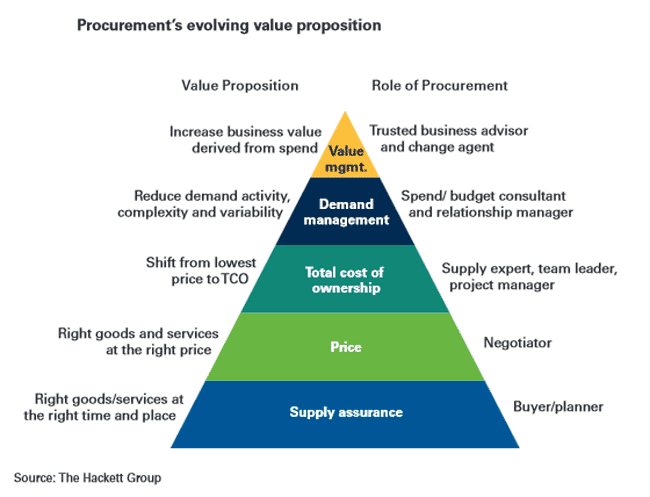
And so the discussion brings us to SMEs. The bigger the Contract (for which the option of division into lots is not available), the harder it will be for SMEs to get into the competition. Decentralisation comes when the decision of the procurement process is localised, local! These Centralised Procurement Units are meant as a model of the Strategies, as a kind of regional Centre with its own staff, acting as a network and with a set number of procedures per category. Admirable, but it may run against the day-to-day local reality.
Procurement involves not only the procurement people, the experts, but also those from human resources (H.R.), IT, finance, administration, directors, etc.
Will these C.P.U.s manage all these people?
Decentralisation requires: a procurement manager (Procurement Adviser, public procurement specialist, expert), projects, departments that want various products, services, works. Advantages:
- Fast reaction and decision time; flexibility brings the advantage of the division of labour
- Employees will improve their specialist knowledge periodically
- Creativity is encouraged
- Materials can be bought as they are requested
- Materials are purchased in the quantities requested, at the required quality, for each department separately
- The principle of correct procurement applies: the Correct Quantity, at the Correct Quality, for a Correct Price, at the Correct Place and Time!
- A lot of money is not invested at once
- The order note is drawn up quickly
- Faulty equipment is replaced quickly without too many approvals
- The existence of high-performance IT management
- Quality assurance and standards
- More efficient accounting
- Obtaining local discounts
- There are no delivery malfunctions due to geographical spread
If an organisation is accountable for its purchases, any attempt at control and at imposing centralisation will have very little chance of success.
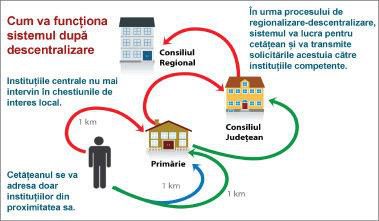
That is why it is important to understand that operational structures and models must be chosen very carefully, according to the specifics of each organisation, and indeed according to the specifics of each purchase.
- Some expenditure can be tightly centralised
- Other expenditure can be left to the sub-units
Two years ago, the energy entities in the U.K. (Great Britain aka – known – as: England) disaffiliated, passing power to the organisations instead of the government.
The keystonev
- To depend (Centralised) does not necessarily mean without control, uncontrollable
- Decentralised does not necessarily mean unstructured
Some purchases (of major interest) could remain centralised while the other, day-to-day ones remain the responsibility of the sub-units.
CounterEx.: The purchase of a construction by the ministry for the benefit of the local authority, as direct beneficiary, without the possibility of completion because the organiser – the ministry – no longer has (wishes to make available) financial resources for executing unforeseen works (investment items) that are due neither to any action nor to any inaction of the local authority, which is put in the situation where, although it would have the necessary funds, it has no possibility of bringing them into the Contract.
Perhaps we are too concerned with the desire to control instead of generating (added) value. What should really interest us:
- That the price paid is correct, in line with the requested standards
- Control over: the (contractual) terms, the (selection, award) criteria, the (delivery, provision, execution) conditions
- That we know when the order was launched and how much (when) was paid
- After-sales services, replacement of defective products, remedying of defects
Conclusion
We need access to innovative, state-of-the-art solutions, software, processes, internal procedures, “user-friendly” platforms.
- The way the Procurement Department is organised reflects the culture, the vision of the organisation.
- What one wants to control Centrally in procurement, set against what is really important, must not lead to irrational centralisation.
- We must be aware of the interference of new technologies that help us to control procurement effectively and transparently towards stakeholders.
Either way, the Procurement Department must be made up of very well-trained, talented people, free people of good morals, eager for win – win partnerships, who do not chase the idea of savings by choosing the lowest price without a clear determination of the end beneficiary’s need.
A bottom-up approach to control would be interesting!
In communes and towns – through total transparency, announcements in local newspapers, on their own website, display on local billboards (the places where films and local cultural programmes are advertised), sending leaflets to citizens stating precisely the costs of inventory items, fixed assets and investments, with references to the advantage obtained for the price paid compared with the market price.
In the counties, county councils – citizens together with local councillors should set the priorities, the county authorities keeping the executive role, through postal information campaigns that accept citizens’ proposals, and online, because they finance the county projects, those of the region concerned, and they too should control the implementation of the programmes.
Dipl. Eng. Ovidiu SLIMAC
Public Procurement Specialist and Expert
Notes
- i Philip Kotler (born 27 May 1931 in Chicago) is the founder of modern “marketing management”, professor of international marketing at the J. L. Kellogg Graduate School of Management, Northwestern University, USA. He holds a degree in economics from the University of Chicago and a doctorate in economics from the Massachusetts Institute of Technology. He was selected by the Financial Times as the 4th management Guru of all time, after Jack Welch, Bill Gates and Peter Drucker, and was named by the European Management Centre (Management Central Europe) as “the world’s greatest expert in market strategy practices”. ↩
- ii compulsory volunteers ↩
- iii “It is necessary for the party and state bodies to guide the cooperatives permanently, to ensure a better organisation of procurement work, to create a network of well-trained purchasers who are stimulated and controlled in their work, developing their skill in making purchases.” SCÎNTEIA, 1953, no. 2552. ↩
- iv Generic name given to the repressive control bodies such as the Militia, the Party bodies, the Securitate, etc. ↩
- v An engineering, builder’s term, although it has stellar, astronomical connotations, referring to the 7 liberal arts ↩
Reference
Slimac, O. (n.d.). Centralizare versus DesCentralizare [Centralisation versus Decentralisation].
Editorial note
Published materials express the opinions and analyses of the authors who sign them and do not necessarily represent the position of Achiziții Corecte / Correct Procurement. Each author is responsible, in accordance with the law, for the content of their own contribution, including the statements made, the accuracy of information, the identification of sources, and respect for third-party rights. Publishing or making a material available does not constitute adoption or validation of all its opinions and conclusions. The materials are for information purposes and do not replace advice tailored to a particular situation. This note does not exclude liabilities that cannot be excluded by law.


You must be logged in to post a comment.