← Academia · Versiunea în română
Translated from Romanian by Achiziții Corecte. The Romanian text is the reference version.
IN MEMORIAM
Octavian SLIMAC
Discreetly, just as he lived, full of dignity, on 3 April 2018 he passed into another stage, an Orient on the way to another life, the life Hereafter, where his place is at the right hand of the Father: the professor, the teacher, the mathematician, the university lecturer, the distinguished MAN, loving husband, exemplary father
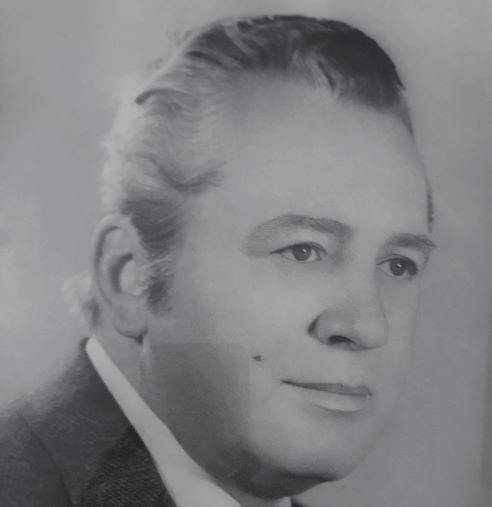
Doctor in Probability, OCTAVIAN SLIMAC
A winner in life. A survivor of the nightmare of deportation, when he carried in his arms the youngest member of his sorely tried family in the 1940s. A living example of how it SHOULD be done for his students, colleagues and relatives. A respectable MAN of good morals, who gave, bestowed and offered, and did not ask.
The parting is announced by the one who was his life Partner for almost 66 years (which he would have completed on 2 January 2019), a devoted wife with whom he had remarkable achievements, Prof. Dr. Volga Slimac, and by the most important fruit of the achievements of the couple, the Slimac spouses, their son, Dipl. Eng. Ovidiu Slimac.
We, mother and son, know that the husband and father, Octavian Slimac, passed away peacefully, without suffering, in the arms of his dearest ones, his wife and his child.
The parting, however, is painful, and we will never forget him and will forever keep him in our souls and in our remembrance. The farewell to earthly things and the entry into the eternal world took place in Timișoara, at the cemetery on Calea Șagului, chapel no. 2, at 13:00, on 6 December 2018.
His wife, with a desolate soul.
His son, petrified with grief.
Definition of the (public) procurement adviser. Description.
A (public) procurement officer (CAP – (Public) Procurement Adviser) is
- the (public) official with the highest degree of recognition,
- holding an executive / management position, and
- responsible for all decisions related to the purchase of raw materials, goods and services for the buyer (the contracting authority).
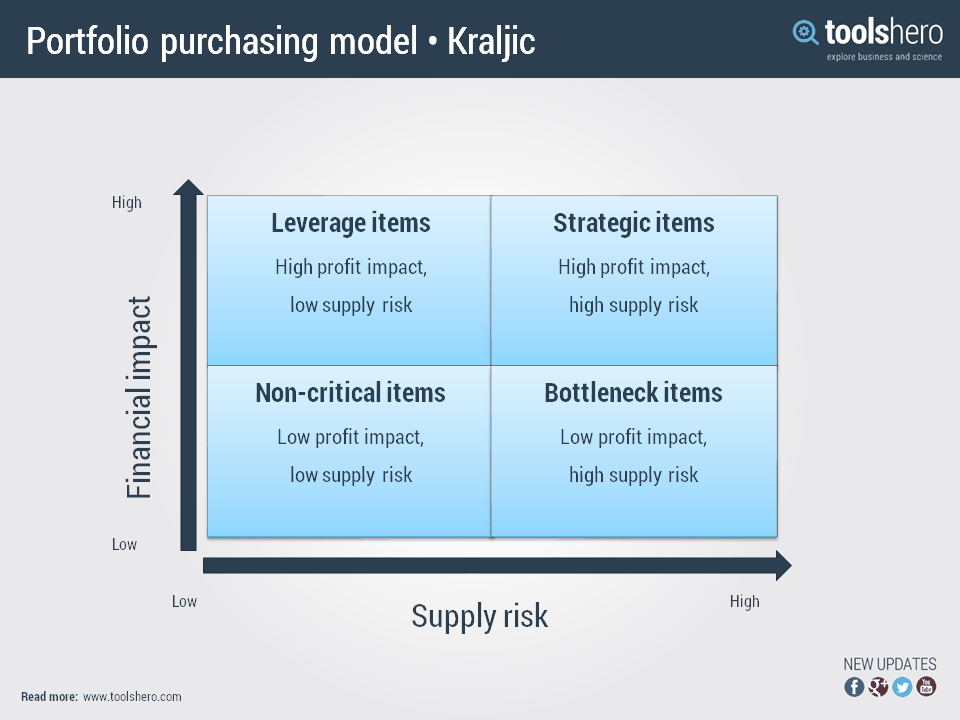
The chief procurement adviser is responsible for managing all purchasing decisions for the firm (the contracting authority). The CA(P) manages extensive research projects on an industry before making key public procurement decisions. The CA(P) is responsible for managing relationships with key suppliers1 and for the firm’s (the contracting authority’s) entire procurement portfolio, from strategic items and co-creation2 to “bottleneck” items and vendor-managed inventory of office supplies3.
- He usually manages a team or a department of purchasing managers.
Over time, because of ever-increasing competition and globalisation, the internationalisation of business processes and the fragmentation of supply chain activities, procurement decisions and strategies have become more important in large firms. Because of the increased importance of procurement, there was a need to create a position which, like other executive management positions, could help create value for the company by optimising this important function in the unit.
The following difficult requirements for (public) procurement advisers were identified in a Global CAP 2008 survey by Cap Gemini:
1. Organisation. To meet the challenges of globalisation, the procurement function needs a suitable organisational model. Employees within this function must adapt to a geographical dispersion of the company’s supply chain. A commonly suggested model is centralisation and the creation of a centralised procurement department4 that deals with suppliers globally.
2. Talent management5. The increased complexity and strategic relevance of supply chain activities require companies to devote more effort to attracting, retaining and developing human resources (talent) in public procurement.
3. Understanding the real spending needs. It is important for a CAP to understand an organisation’s real strategic needs in terms of spend management. A company’s capacity to save is directly linked to its profitability, insofar as it does not affect the company’s image or quality level. Improving procurement practices does not always mean lower-quality purchases; it can also mean an improvement or integration in the supply chain.
Dipl. Eng. Ovidiu SLIMAC
Public Procurement Specialist and Expert
Notes
1. See the Kraljic Model ↩
2. What is co-creation? Description ↩
Source: https://www.12manage.com/methods_prahalad_co-creation.html
Co-creation: according to C.K. Prahalad and Venkatram Ramaswamy, deregulation, emerging markets, new forms of regulation, the convergence of technologies and industries, and ubiquitous connectivity have changed many aspects of the business world. And they are still causing further changes.
These factors have changed the nature of consumers. Today, consumers are informed, networked, active and global.
These factors have also changed the nature of companies. Today, firms can fragment their value chain in ways that were not possible before. Both the physical and the non-physical part of corporations (business and management processes) can be divided.
The trends above enable a new form of value creation: Co-Creation, in which value is not created in the firm and then exchanged with the customer, but in which value is co-created by the firm and the consumer. Value will have to be created jointly by both the firm and the consumer. In the traditional system, in which firms decide on the products and services they will produce, they implicitly decide what is of value to the customer.
In this system, consumers have little or no role in value creation. Over the last two decades, managers have found ways to share some of the work done by the firm and pass it on to consumers. Whether it is self-checkout, involving a subgroup of customers in product development, or a range of variants in between. Note that co-creation goes far beyond customer orientation.
Connected to this trend in product creation, in Prahalad’s view, we are also moving away from a company- and product-centred view of value creation towards an experience-based view of value co-creation. High-quality interactions that allow an individual customer to co-create unique experiences with the company are the key to unlocking new sources of competitive advantage. Products are only an artefact around which compelling individual experiences are created.
The origin of co-creation. History
Since the 1990s, Prahalad and co-guru Gary Hamel have published an influential management theory: ‘Core Competence’. Core competences are the unique capabilities and know-how that give a company a competitive edge.
Steps in co-creation. Process
The typical steps involved in value co-creation include:
- Defining clear objectives for the project.
- Establishing who the right customers are to involve in this process. Compare: the Kraljic model. Today’s customers may be different from tomorrow’s customers.
- Working with customers to find out what they really want to include in a product or service.
- Designing products or systems jointly to meet customers’ needs. This includes selecting the partners that will be included in your network.
- Deciding how the value is to be shared.
- Overcoming internal resistance to change – within the seller, the buyer and the partner organisations. This is an important step in making sure you keep control.
The limitations of co-creation. Disadvantages
- Markets and industries and companies, systems and people do not change quickly. So it might take some time before the whole world co-creates.
- Collaboration is much more difficult than competition.
- The concept is a challenge to many of managers’ habits. Changing the mindset within a company to the way an external customer thinks is not easy.
- Accounting rules based on what a company ‘owns’ are also questionable. Accounting laws are also hard to change.
3. What is vendor-managed inventory? Description ↩
Vendor-managed inventory (VMI, IF in Romanian) is a supply chain practice in which inventory is monitored, planned and managed by the vendor on behalf of the consuming organisation, on the basis of its demand and of previously agreed minimum and maximum levels. Traditionally, success in supply chain management derives from understanding and managing the trade-off between inventory cost and service level. VMI projects can lead to improvements in both dimensions. At least 2 forms can be distinguished:
- A wholesale distributor (distributor) manages inventory levels for a retailer. VMI in this context is also called efficient consumer response (ECR). Note that the distributor still owns the inventory, although the replenishment order is triggered by the wholesaler.
- A manufacturer manages inventory levels for a distributor. Note that the distributor still owns the inventory, although the replenishment order is triggered by the manufacturer.
VMI is based on the belief that supplying parties are in a better position to manage inventory, because they have better knowledge of the production capacities for the goods and of lead times. It is also based on the belief that allowing suppliers to manage inventory reduces the number of layers in the supply chain, increasing stock visibility and reducing overall stock levels. To enable VMI, sales data must be provided to the supplier through Electronic Data Interchange (EDI), through other electronic means or through traditional human agents at points of sale.
Other terms for VMI are continuous replenishment inventory and supplier-managed inventory.
The origin of vendor-managed inventory. History
VMI began in retail and grew out of efficient consumer response (ECR), in which consumer satisfaction or consumer expectations regarding stock availability are an important way of having a competitive advantage over others. Wal-Mart is one of the successful pioneers of this supply chain strategy.
VMI is gradually progressing towards forms based on strategic partnerships. This influences the way companies plan their inventory, evolving into Collaborative Planning, Forecasting and Replenishment (CPFR).
The use of vendor-managed inventory. Applications
- Errors in sensitive industries. Example: the pharmaceutical sector.
- Multiple outlet openings, fast-moving consumer goods. Example: Wal-Mart.
- Perishable goods. Example: K Mart.
- Valuable and unpredictable components. Example: PC manufacturing. Compare: the Kraljic model.
- Strong competition (low error margins). Example: Automotive.
Steps in vendor-managed inventory. Process
VMI should be achieved in several stages:
- Communicating the expectations of all stakeholders.
- The retailer / distributor must commit to sharing accurate information.
- The supplier must ensure reliable transmission, receipt and use of information.
- Agreement on the ordering policy, risk sharing and rewards. Time and human resources.
- Long-term testing.
- Implementation and evaluation. Tuning, adjustment.
- Appreciate vendors who manage their inventory well. Example: promotion to “Category captain”, profit-sharing schemes, etc.
The strengths of vendor-managed inventory. Benefits
- Supply chain level:
- Low stock levels across the entire supply chain.
- Increased sales.
- Reduces human data-entry errors.
- Inventory:
- better understanding of customer demand (better use of resources, reduction of raw material and finished product stocks).
- Improvement, more direct communication with customers. Improved market analysis.
- Increased sales through lower stocks. The opportunity to provide category management services as well as other value-added services.
- Suppliers:
- Reduced replenishment times and reduced inventory costs.
- Increased sales through lower stocks.
- Less redundant activity.
- Build strategic points by establishing strong supply chain relationships.
- Supplier assistance for product category management.
- End users:
- Increased service level.
- Reduced stocks.
The limitations of vendor-managed inventory. Disadvantages
- The success of the VMI initiative depends on the strength of the relationship between vendors and retailers.
- Increased dependence between the parties and increased switching costs.
- Lack of trust in data exchange can lead to inefficient implementation in one or more of the following forms:
- Inventory invisibility.
- Stock imbalance.
- Technology costs and organisational change.
- Extensive data and EDI testing is needed.
- Loss of the necessary shelf space on the retail side may lead to less attention from shoppers compared with competitors who are not yet in VMI.
- Promotions or special events must be communicated in advance to avoid replenishment planning mistakes (loss of flexibility).
- Increased vulnerability to unforeseen risks, such as employee strikes, hurricanes, etc., because of low stock levels.
- Most of the benefits go to the end customer and the retail side, while the vendor does much of the work.
The assumptions of vendor-managed inventory. Conditions
VMI is usually successful for industries and organisations with the following characteristics:
- Multiple points of sale, as these increase the benefits compared with traditional inventory management.
- Serious consequences in the event of human error (pharmaceuticals).
- Industries with constant, high volume (retail, consumer products).
- Industries with high-value inventory and a high level of demand unpredictability (High Tech).
- Strong management to form long-term strategic partnerships (Automotive). (Book: Edward, A Silver – Inventory Management and Production Planning and Scheduling – ; Book: David Simchi-Levi – Designing and Managing the Supply Chain – )
4. Centralisation and decentralisation? Description ↩
An organisation has to take strategic and operational decisions. Where and by whom should these decisions be taken? And: how should the organisation’s structure adapt? Centralisation and decentralisation are two opposite ways of transferring decision-making power and of changing the organisational structure of organisations accordingly.
Centralisation:
- Definition: The process of transferring and assigning decision-making authority to higher levels of an organisational hierarchy.
- In a centralised organisation, the decision-making process has been moved to higher levels of the organisation, such as a central head office or a corporate centre.
- Knowledge, information and ideas are concentrated at the top, and decisions cascade down within the organisation.
- The span of control of top managers is relatively broad, and there are relatively many levels in the organisation. Compare: The 14 Principles of Management, Author: Henri Fayol (1841 – 1925).
- Division of labour, Authority, Discipline, Unity of command, Direction, Subordination of individual interest to the general interest, Remuneration, Centralisation (Decentralisation), Hierarchy, Order, Equity, Stability of tenure, Initiative, Team spirit.
Decentralisation:
- Definition: The process of transferring and assigning decision-making authority to lower levels of an organisational hierarchy.
- In a decentralised organisation, the decision-making process has been moved to lower levels of the organisation, such as divisions, branches, departments or subsidiaries.
- Knowledge, information and ideas flow from the bottom to the top of the organisation.
- The span of control of top managers is relatively small, and the organisation has relatively few levels, as there is more autonomy at the lower ranks.
Three forms of decentralisation
Deconcentration. The weakest form of decentralisation. Decision-making authority is redistributed to lower or regional levels of the same central organisation.
Delegation. A more extensive form of decentralisation. Through delegation, responsibility for decision-making is transferred to semi-autonomous organisations that are not entirely controlled by the central organisation but are ultimately accountable to it.
Devolution. A third type of decentralisation is devolution. Decision-making authority is ceded completely to autonomous organisational units.
The strengths of centralisation. Characteristics
- Philosophy / emphasis on: top-down control, leadership, vision, strategy.
- Decision-making: strong, authoritative, visionary, charismatic.
- Organisational change: comes from the top, according to the leader’s vision.
- Execution: decisive, fast, coordinated. The ability to respond quickly to major problems and changes.
- Uniformity. Low risk of dissent or conflict between parts of the organisation.
The strengths of decentralisation. Characteristics
- Philosophy / emphasis on: bottom-up, political, cultural and learning dynamics.
- Decision-making: democratic, participative, detailed.
- Organisational change: emerging in interactions, organisational dynamics.
- Execution: evolutionary, emergent. Flexible, adapted to minor problems and changes.
- Participation, responsibility. Low risk of not-invented-here behaviour.
5. Defining Talent Management. Description. ↩
Talent Management is an approach to managing human capital throughout the career cycle. It involves the recruitment, selection, identification, retention, management and development of staff considered to have high-performance potential or leadership positions (sometimes the terms are also used for all staff). Talent management is part of Human Resource Management.
Each organisation has different requirements for its own current and future “talent pipeline”, as well as for the various aspects of how these requirements must be met. These considerations must determine the talent management strategy that each organisation should develop.
This term is usually associated with competency-based human resource management practices. Talent management decisions are often guided by a set of core organisational competencies as well as position-specific competencies. Talent may include skills, knowledge, cognitive abilities and potential, experience and personal traits (demonstrated through defined behaviours). Employees’ values and work preferences are of major importance.
The following stages of talent management maturity can be distinguished (CIPD study, 2006):
- There are no talent management strategies, policies or formal practices developed
- Isolated / tactical / local attempts at talent management activities
- Integrated and coordinated talent management activities for a particular segment of the organisation
- A talent management strategy designed to deliver corporate and human resource management strategies
- The talent management strategy informs and is informed by the corporate / institutional strategy
Similar to human capital management.
Reference
Slimac, O. (2019, January). Reîntoarcerea la bază – Consilierul de achiziții (publice) [Back to basics – The (public) procurement adviser]. Revista de Achiziții Publice, (136).
Editorial note
Published materials express the opinions and analyses of the authors who sign them and do not necessarily represent the position of Achiziții Corecte / Correct Procurement. Each author is responsible, in accordance with the law, for the content of their own contribution, including the statements made, the accuracy of information, the identification of sources, and respect for third-party rights. Publishing or making a material available does not constitute adoption or validation of all its opinions and conclusions. The materials are for information purposes and do not replace advice tailored to a particular situation. This note does not exclude liabilities that cannot be excluded by law.


You must be logged in to post a comment.