← Academia · Versiunea în română
Translated from Romanian by Achiziții Corecte. The Romanian text is the reference version.
Increasing the impact of public investment through efficient and professional public procurement
Defining the priority areas for improvement – six priorities:
- more systematic use of innovative, green and social criteria in awarding public procurement contracts;
- professionalisation of public buyers;
- improving SMEs’ access to EU public procurement markets and EU companies’ access to public procurement markets in third countries;
- increasing the transparency, integrity and quality of public procurement data;
- digitalisation of public procurement procedures; and
- closer cooperation between public authorities across the EU.
Voluntary ex ante assessment of major infrastructure projects
- Complex projects can run into problems from the very start if project managers do not fully understand the complex rules that apply to large-scale public procurement.
- The Commission will set up a helpdesk able to answer specialist questions at an early stage on projects with an estimated value of over EUR 250 million.
- For projects of major importance for the Member State concerned, or with a total estimated value of over EUR 500 million, the relevant authorities may ask the Commission to verify whether the complete procurement plan is compatible with EU public procurement law, significantly reducing uncertainty and the risk of delays and legal challenges.
- This mechanism is voluntary, the Commission’s opinion is not binding, and information will be treated in strict compliance with confidentiality requirements.
Recommendation on the professionalisation of public buyers
- The Commission recommends measures that Member States should take to ensure that public buyers have the business skills and the technical and procedural knowledge needed to comply with the rules and to ensure that taxpayers get the best products and services for their money.
- The Commission will facilitate the exchange of good practice and innovative approaches.
Consultation on stimulating innovation through public procurement
- On 3 October 2017 the Commission launched a targeted consultation1 to obtain feedback from stakeholders on ways of stimulating innovation through the purchase of goods and services.
- Public procurement of innovation can target the results of innovation as well as innovative ways of procuring.
EU public procurement law2 provides that all public procurement contracts above a certain threshold must be awarded through tendering, in compliance with the principles of transparency, equal treatment and non-discrimination.
- Rather than awarding a contract on the basis of the best price, authorities are encouraged to integrate qualitative criteria, to ask for innovative, energy-saving solutions or to insist on sustainable approaches focused on social cohesion.
- The Commission continues to monitor closely the transposition of EU public procurement law into national law and to help public authorities understand and take full advantage of the possibilities offered by public procurement.
- It is urgent to quickly overcome the current deadlock in the Council concerning the Commission’s proposal for an International Procurement Instrument3.
The modernised public procurement directives of 20144 adapted the public procurement framework to the needs of public buyers and economic operators arising from technological developments, economic trends and the increased social emphasis on sustainable public spending.
Public procurement in and for Europe
In times of fundamental change for the EU and of a renewed debate on its future direction, it is clear that Europeans deserve, and increasingly demand, an EU that delivers concrete results. Action taken at EU level should translate into economic growth and competitiveness, sustainability, solidarity and security. As stated in the Investment Plan for Europe5, boosting investment is essential to achieving such results, by unlocking the creation of more jobs and sustainable growth of the single market.
A substantial part of public investment in our economy is spent through public procurement, representing approximately 14% of Romania’s GDP, which makes it a fundamental element of the investment system. Public authorities can use this lever in a more strategic manner, to obtain added value for every public penny spent and to contribute to a more innovative, sustainable6, inclusive and competitive economy.
In addition, improving procurement is part of a stronger single market.
The present document sets out a public procurement strategy that establishes the overall policy framework and defines clear priorities for improving procurement in practice and supporting investment within the EU.
Three concrete initiatives are presented together with this strategy. The European Commission is presenting a communication on a mechanism for large-scale infrastructure projects, to provide clarity and guidance to public authorities in the field of public procurement. It also proposes a Recommendation to professionalise public buyers, because a skilled workforce is essential for effective implementation. In parallel, public procurement of innovation is being considered, in order to support the progress of new sustainable solutions for our society.
1. PUBLIC PROCUREMENT MATTERS MORE THAN EVER
Europeans expect a fair return on their taxes in the form of high-quality public services.
Parents would like to see healthy food for their children in schools; city dwellers expect increased investment in smart and sustainable cities for a better life, with safe dedicated cycle paths, and markets and playgrounds built with safe and innovative materials; road users expect high-quality, safe infrastructure; patients need improved access to better-quality healthcare and expect the latest medical equipment and diagnostic tools to be used for their benefit. Ensuring the delivery of high-quality public services requires a strategic approach to procurement and purchasing. This depends very much on modern and efficient public procurement processes.
For public authorities, public procurement is a powerful instrument for spending public money in an efficient, sustainable and strategic way, especially in times of tight national budgets.
Amounting to EUR 2 000 billion every year, better-managed procurement can lead to significant savings in public budgets and, evidently, to more investment. For example, an efficiency gain of 10% could bring significant savings of EUR 200 billion per year7, without reducing the level of services provided to Europeans. Procurement also has a major impact on the EU structural and investment funds, where almost half of these funds are spent through public contracts. Good contracting helps achieve the best results for these EU funds.
Procurement is also important for European companies, which benefit from the single market when bidding for public contracts in their own countries as well as in other EU Member States. Accelerating technology and digitalisation, demographic change and increasingly interconnected markets strongly affect our societies and economies. In a globalised world, the economic integration brought by the single market remains a key factor for creating wealth and competitiveness and, therefore, our best protection.

Public procurement is a strategic instrument in the economic policy of every Member State. The 2015 Single Market Strategy8 made it more transparent and more efficient and led to a more efficient system of responsible public procurement. This requires a shift from a purely administrative approach to a strategically oriented, needs-based one, in full compliance with the rules. With around 14% of EU GDP spent every year, public procurement can help address many of Europe’s major challenges, particularly as regards creating sustainable growth and jobs9. It can enable investment in the real economy and stimulate demand for increased competitiveness based on innovation and digitalisation, as underlined in the “Industry Communication”10. It can also support the transition to a resource-efficient, energy-efficient and circular economy11 and encourage sustainable and equitable economic development.
The new generation of public procurement directives12, adopted in 2014, provides a framework for procurement in a more flexible way. They simplify public procurement, improving SMEs’ access to public procurement. The overall objective is to obtain the best possible value for public money, in order to achieve better public and social policy results while at the same time increasing the efficiency of public spending. Finally, the directives strengthen the provisions on integrity and transparency and target corruption and fraud.
Although the transposition of the directives into national law was slow13, this modernised legal framework is now in force in the vast majority of Member States. The process14 identified numerous specific areas in which improvements have occurred in the national public procurement landscape and contributed decisively to increasing competitiveness and efficiency. At the same time, Member States are not making full use of the possibilities of public procurement as a strategic instrument for supporting sustainable objectives, social policies and innovation.
It is therefore the time, the place and the right moment to focus on the smart application of the new rules in practice.
Through this communication, the Commission identifies specific areas in which change can make a difference to the way public money is spent in the Member States, thus contributing tangibly to economic growth and employment in the EU. It describes the Commission’s vision of what public procurement in Europe could and should be in the near future. Fully recognising the competences of the Member States and their public authorities, the Commission is firmly committed to supporting a change in public procurement culture in the Member States. This needs political support at all levels of government and a passive change in the way public procurement is carried out. The Commission therefore calls for a broad partnership with and between Member State authorities at all levels of government, including other stakeholders, with clear mutual commitments.
2. PROCUREMENT TODAY: CHANGES ARE HAPPENING, CHALLENGES REMAIN
At EU level, several initiatives launched in recent years are starting to deliver results.
The legal framework in force has helped improve and integrate future public procurement markets in the Member States. The creation of a single public procurement market in the EU is a major achievement compared with other regions of the world. Data show that total cross-border procurement (direct and indirect) has increased in recent years to about 23%15 of the total value of public procurement in the EU, although there is still room for improvement. As announced in the Commission communication “Better governance for the Single Market”16, the Commission provided extensive assistance to Member States during the process of transposing the new directives into national law.
In the context of the European Structural and Investment Funds (ESIF), Member States must fulfil ex ante conditions on procurement, which should guarantee that the basic framework conditions for efficient investment and effective co-financing through these funds are in place. Reform processes should continue in the Member States, with the full support of the EU Commission.

In several Member States, radical measures have been taken in recent years to reform procurement practices or structures. In France, for example, the State Procurement Directorate was created in March 2016 to define the state’s procurement policy and to provide training for public buyers. In Ireland, a central purchasing body17 was set up in 2014 with a clear mandate to improve the management of public spending through the extensive use of market and other public procurement data. In Italy, average savings of 23% were achieved by creating a coordinated system for identifying needs and procedures for cooperative procurement.
Under the HAPPI project18, innovative solutions for healthy ageing were procured jointly by contracting authorities from several Member States19. Slovakia introduced a contract register that gives public access to all contracts concluded by public authorities in the country, thus improving transparency and enabling public scrutiny. 40 public authorities from 8 EU countries calculated that more than 100 tenders launched under the EU-funded GPP 2020 project20 led to savings of over 900 000 tonnes of CO2 equivalent.
Change can also happen from the bottom up. The “Pact of Amsterdam”21, a broad partnership agreed in May 2016 between a large number of stakeholders and institutions, including those of urban authorities, pursues a balanced, sustainable and integrated approach to tackling urban challenges. Procurement is one of the key means of achieving this, including through innovative, green and responsible public procurement solutions. Such examples can inspire others to follow similar paths, taking their own particularities into account.
Nevertheless, these positive developments often remain isolated good practices and need to be embedded in a wider movement, encouraging others to join and learn from these experiences. Several indicators show that there is still much room for improvement.
The possibilities of strategic procurement are not used sufficiently. 55% of procurement procedures still use the lowest price as the only award criterion. Public procurement (the directives) leaves public buyers completely free to opt for procurement on the basis of cost-effectiveness and quality criteria22. Nevertheless, most economically advantageous tenders based on a cost that could include social, environmental, innovative, accessible or other qualitative criteria23 are still insufficiently used.
As regards innovation, analyses show that procurement of innovation is hindered by various barriers24. One way of improving the situation could be a wider use of the innovation partnership procedure. This instrument, through which market players are invited to bring innovative solutions, was created by the 2014 Directives to meet the particularities of innovative procurement, as well as to increase legal certainty and reduce inherent risks. So far, (at least) 17 innovation partnership procedures have been launched.
Public procurement relies on open competition to obtain the best value for public money. This competitive process is either absent or losing intensity. 5% of public contracts published in TED are awarded after negotiation without a call for tenders having been published. Between 2006 and 2016, the number of tenders with a single bid increased from 17% to 30%. The average number of bids per tender fell from five to three over the same period. This shows that companies have faced greater difficulties in accessing public procurement markets, especially cross-border ones. SMEs win only 45% of the value of public contracts above the EU thresholds, well below their actual weight and potential in the economy.
Public procurement is often still regarded as a simple administrative procedure: public authorities purchase the basic products, services or works needed for their operations. This is illustrated by the fact that clear and consolidated procurement data are often not available. There is no consensus at EU level on which data should be collected and for what purpose. In many Member States, central authorities are unable to indicate the exact size of public procurement spending in their country, despite the huge amounts of money involved. In such cases, public scrutiny is largely absent, there is no possibility of data-based policy-making, and even budgetary control is hindered.
In the same way, the digital transformation of public procurement is slow. In one year, 2016, only four Member States relied on digital technologies for all the major stages of procurement processes25. Member States are not yet using the emergence of new technologies to simplify and speed up their own public procurement procedures.
Contracting authorities rarely buy / procure together, as only 11% of procedures are carried out through cooperative procurement procedures. Buying in bulk often leads to better prices and also offers the possibility of exchanging know-how and obtaining better quality. Although not all types of procurement are suitable for this kind of aggregation, the generally low aggregation rate suggests missed opportunities.
It is argued that public procurement procedures are too complex and suffer from an excessive administrative burden, even after the major reform and simplification of the EU rules initiated in 2014, mentioned above. There is even more complexity for transnational infrastructure projects which, by their nature, are not standardised because they involve various actions to be implemented in different Member States. The real degree of complexity also depends on how the rules are applied in practice and the extent to which the new instruments are used.
Procurement can be further simplified by standardising processes, by exchanging good practices between authorities and by professionalising public procurement.
3. THE WAY FORWARD: A GENERAL PARTNERSHIP FOR COMMON SUCCESS
To improve recognition of the strategic dimension of public procurement and to improve public procurement in practice, strong and broad political ownership is needed at all levels of government. There is significant potential for improvement if authorities commit as seriously as possible to taking the matter into their own hands. Instead of considering procurement as an administrative obligation, there is much more to be gained from a proactive approach to procurement policy.
The Commission is keen, together with good cooperation and legal assistance, to engage with Member States and stakeholders on the problems and actions they face at EU level, and to bring its support so as to provide clear added value. To achieve the necessary improvements, the Commission proposes a broad collaborative partnership in order to move to an efficient, transparent, digital and smart way of working together that fully respects the public procurement system and the challenges brought by the current changes in the environment. Each partner will have its own role to play, but the commitments should be mutually reinforcing.
Several simultaneous and coordinated efforts can generate greater overall benefits than the simple sum of all individual efforts, through multiplier effects.
The partnership could cover the following stakeholders and aspects:
National authorities could improve the organisation of procurement by formulating clear national procurement strategies, by ensuring more effective coordination at national and regional level, by providing clear national rules and practical guidance, by exchanging good practices, by setting up competence support centres and central purchasing bodies, by increasing transparency and by offering fast, independent and fair review procedures.
Regional and local authorities could cooperate more and use strategic and digital procurement and the professionalisation of public buyers / procurers.
The Commission would undertake to collaborate and to further develop a wide range of support tools, including guidance and best practices in several key areas, in order to make procurement as simple and effective as possible. At the same time, it will continue to pursue its enforcement policy and to use its discretionary power in a strategic way, focusing on the most important infringements of EU law affecting the interests of citizens and businesses.
- Businesses, industry and business associations could, for example, encourage greater participation in public procurement markets, including beyond their national borders, by attracting bidders to compare different solutions on an objective basis. Review procedures must be used responsibly. Market consultation before launching the procedure is an important step in improving procurement expertise and should also involve, [the sentence breaks off here in the original]
Stakeholders: There is increased attention to participatory budgeting in many cities and communities, which could pay increased attention to criteria promoted by local groups. Journalists and the public should use the available data to exercise public scrutiny of public procurement and to hold contracting entities accountable. Scientists and academia also play an important role, including by developing analysis models and analytical data.
At EU level, the competent committees of the European Parliament and the Competitiveness Council could become a forum for an ongoing political debate on public procurement in the Member States / and respectively in Romania. The partnership could also materialise through voluntary structured dialogues on procurement, which would, where appropriate, be fully aligned with the European Parliament’s processes. These dialogues could be implemented collaboratively between the Commission and the Member States. This would also allow a differentiated approach, with a focus on achieving structural reforms and compliance where necessary and more advanced support for others.
Similar processes can also be created at national level, involving the relevant stakeholders in a genuine collaborative process. Currently, 70% of the EU population is concentrated in urban areas; the Urban Agenda proposed by the Commission to provide a pan-European approach to multi-stakeholder involvement plays an important role.
Implementing smart public procurement systems fit for the 21st century requires the commitment and determination to modernise, digitalise and professionalise. A clear agreement on how success needs to be measured, accompanied by clear milestones and progress monitoring. Authorities at all levels and stakeholders – given the heterogeneous public procurement systems and the divergent levels of maturity and advancement among the Member States – are best placed to determine the content and level of their commitments.
The Commission is ready to support such efforts and to promote the exchange of information, knowledge and experience, including at national and regional level. It also commits to a number of supporting actions listed in the Annex. The Commission looks forward to a broad policy dialogue, cooperation and collaboration with national and local authorities and other stakeholders in order to establish voluntary but strong commitments. The Commission is also working on improving its own procurement practices in order to make greater use of strategic criteria26.
4. What needs to be improved – six strategic priorities
The Commission has identified six priority areas in which clear and concrete action can be taken and which turn public procurement into a powerful instrument in the economic domain of every Member State, capable of generating substantial benefits as results of public procurement.
a) Ensuring wider uptake of strategic public procurement
Strategic public procurement should play a greater role in enabling central and local governments to respond to social, environmental and economic objectives, such as the circular economy. Integrating innovative, green and social criteria27, wider use of pre-procedure market consultations, consultations or qualitative evaluations (MEAT28), as well as innovative procurement as solutions at the pre-commercial stage require not only a very broad range of public buyers, but above all political vision and political ownership. Some Member States have done this with MEAT, including through mandatory green criteria for their procurement processes. Others could consider setting voluntary targets to monitor uptake. In any case, to achieve optimal results in public procurement, strategic criteria must be applied systematically.
This can be ensured through extended practical support, such as the dissemination of standards, benchmarking methodologies, periodic updates of labels29 and evaluation criteria, and the availability of a library of cases and good practices.
For example, for green procurement, the Commission will make a proposal to amend the Clean Vehicles Directive 2009/33/EC30, is preparing an updated version of the ‘GPP Training Toolkit’ and intends to develop tools for voluntary use to calculate life-cycle costs for certain products. As regards social public procurement, the existing guidance will be updated. A collaborative approach will be adopted for this update; it will start with a stakeholder consultation to collect suggestions on the scope of the guidance and on the problems they may have, including on how best to integrate the demand function for innovation and social entrepreneurship. The proposed European Accessibility Act31 aims to establish a common set of functional accessibility requirements for persons with disabilities and for older persons. As regards innovation, an overview of the policy and implementation framework and guidance on innovation and innovation-friendly public procurement procedures are being prepared.
While a broader approach to strategic procurement is a priority, the Commission recognises that in many Member States there are still shortcomings in the proper functioning of the public procurement system. The Commission will continue to provide support and guidance to achieve fully operational systems in these countries, before further engaging in the integration of green, social and innovative criteria.
A specific approach is needed for priority sectors such as construction, healthcare and the IT sector, because of their leverage effect, their particularities and specific challenges, including the rapid evolution of technology and the market. The Commission’s initiative on a voluntary ex ante assessment mechanism for large infrastructure projects can be seen in this context.
Initiatives and tools already exist, such as promoting value-based procurement in healthcare, Building Information Modelling technology32 and life-cycle thinking approaches to support the procurement of sustainable public buildings33, or the European catalogue of ICT standards for public procurement, to improve interoperability and avoid vendor lock-in.
At the same time, the defence and security sectors must be specifically oriented towards cybersecurity34. Work is already advanced in the context of the European Defence Action Plan. The action plan focuses on the effective implementation of the Defence Procurement Directive, with a view to offering opportunities to European companies regardless of their size and location.

This involves:
providing guidance on certain aspects of the directive;
establishing periodic reports (scoreboards) on Member States’ application;
discussing implementation with Member States; and
promoting initiatives to improve cross-border market access for SMEs and sub-suppliers (a recommendation addressed to Member States and its involvement in industry).
b) Professionalising public buyers, the public procurement specialists and experts35
People with the right set of skills are needed to drive change. The low level of professionalism of public buyers, the public procurement specialists and experts36, is a systemic problem in many Member States.
Improving professional skills in public procurement at all stages of the procurement process, including e-skills, is of vital importance. The changing culture and the increased use of strategic public procurement require wider use of flexible practices, market knowledge and innovative tools.
The public sector needs to implement a comprehensive strategy to counter risk aversion and to attract, train and develop talent and skills throughout the public procurement field.
Member States are at different stages of their journey towards professionalisation, but it is important that all of them commit to this journey. Sharing experiences will allow them to improve their public procurement practice and will increase the impact and reputation of procurement in the EU in meeting public policy objectives. Long-term professionalisation strategies at national level are essential to have the right people with the right skills and tools in the right place at the right time to deliver the best results.
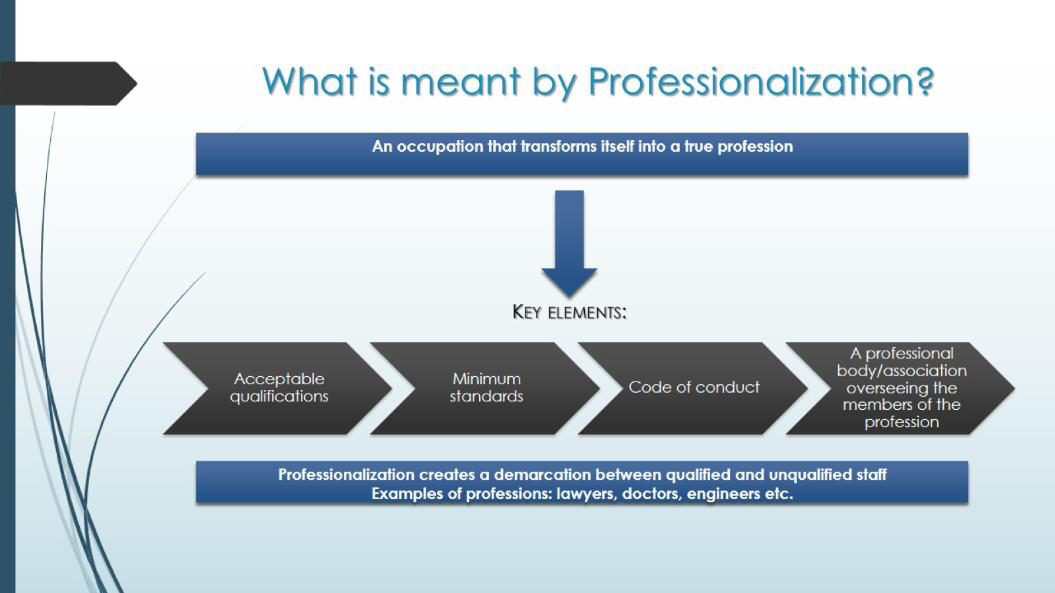
The Commission undertakes to assist Member States in their efforts to develop and implement these strategies through a Recommendation37 on professionalisation, which establishes a European competence framework, as a hub for information knowledge and the exchange of good practices, and targeted assistance via the internet, for capacity building and professional training offered through country support, through instruments available in various Commission programmes38.
c) Improving access to public procurement markets
SMEs are essential for job creation, growth and innovation, but they face difficulties in gaining access to procurement, both within the EU Member States and on international markets. At present, SMEs win 45% of the aggregate value of public procurement contracts above the EU thresholds – directly, as joint bidders or as subcontractors. The 2014 Directives include measures39 that should facilitate SME access to public procurement, including cross-border procurement. These have improved participation opportunities for SMEs and must be communicated more vigorously to the general public, companies and contracting authorities. This is particularly important as regards promoting more cross-border procurement. The aim is to increase the share of SME participation in public procurement in line with their overall weight in the economy. The Commission has also launched specific actions to facilitate SMEs’ access to procurement, such as projects funded by the COSME programme. In addition, particularly in the defence sector, measures have been taken to facilitate SMEs’ access to cross-border markets, as presented at European level and in the Defence Action Plan40.

Another way of improving access is building trust among market players, including SMEs, so that they participate in public procurement procedures. This can be done by offering fair and effective possibilities for resolving problems and an independent review of public procurement decisions. The Remedies Directives41 were recently evaluated42, and a network of first-instance review bodies was set up in March 2017. The Commission will continue to monitor the situation in this respect, to provide guidance and to actively promote cooperation and exchanges of good practice between Member States, including review and appeal bodies, in order to improve the efficiency and quality of review systems in the EU.
The EU is the most open procurement market in the world, but our companies’ access to other countries is not always reciprocal. Important trading partners of the EU maintain discriminatory measures affecting EU businesses by granting preferential treatment to national bidders43
The Commission’s paper on harnessing globalisation underlined that restoring a level playing field in this area is more necessary than ever and called for the swift adoption of an international procurement instrument44. This would increase the European Union’s leverage in negotiations with trading partners. There is an urgent need to break the current deadlock in the Council concerning this instrument.
The Commission will continue its efforts to promote access to public procurement markets, helping EU companies to sell abroad. In this context, the Commission encourages non-EU states to accede to the WTO Agreement on Government Procurement and seeks to conclude ambitious procurement chapters in free trade agreements. These aim to ensure that EU businesses have the legal right to participate in tenders in third countries, in those wishing to accede, and including in the EU’s neighbourhood policy partner countries, on an equal footing with the respective national companies.
The Commission also promotes a favourable regulatory environment in non-EU countries45 by promoting the development of global and convergent standards in public procurement.
d. Increasing transparency, integrity and better data
Reliable data are essential for preparing appropriate policy responses. The digital transformation, the ever-growing wealth of data in general and the availability of open data standards offer opportunities to create better analysis of needs-based policy-making and warning systems to flag and combat corruption46 in public procurement. Better and more accessible procurement data47 should be made available, because they open up a wide range of opportunities to better assess the performance of public procurement policies, to optimise the interaction between public procurement systems and to shape future strategic decisions.
Electronic procurement systems must produce good-quality data, but, even more importantly, decision-makers must use these data and share them with all stakeholders. They also provide a means of detecting irregularities. At EU level, the Commission will propose new electronic forms48 to improve data collection.
Access to public procurement data should enable dialogue with civil society and the accountability of governments. Public authorities are thus better equipped to combat fraud and corruption49. To this end, the creation of publicly accessible contract registers50, ensuring the transparency of awarded contracts and their modifications, is strongly recommended.
Enabling the reporting of corruption by establishing effective reporting mechanisms and protecting whistleblowers against retaliation can also help improve the transparency of public procurement and save public money51.
The Commission is currently assessing the need, legal feasibility and scope of horizontal or further action at EU level to strengthen whistleblower protection.
The public procurement directives offer ample opportunities to move towards corruption-free and transparent public procurement procedures, i.e. by introducing mandatory e-procurement and by strengthening the provisions on conflicts of interest52 or extending the grounds for excluding bidders. Awareness of these possibilities must be raised at all levels of government.
Collusion is a recurrent feature of certain public procurement markets. It can add up to 20% to the price otherwise paid in competitive markets53. Competition authorities have been entrusted with investigative and enforcement powers to punish collusive practices, but only when there is a suspicion of secret agreements. The Commission will therefore develop tools and initiatives to address this problem and raise awareness in order to minimise the risks of collusive behaviour in public procurement markets. These will include actions to improve contracting authorities’ market knowledge, support for contracting authorities in the careful planning and design of procurement procedures, and better cooperation and exchange of information between public procurement authorities and competition authorities. The Commission will also prepare guidelines on the application of the new EU procurement directives as regards the exclusion grounds relating to secret agreements.
e. Boosting the digital transformation of procurement
New digital technologies offer great opportunities to simplify the procurement process by introducing electronic public procurement. The public procurement directives provide that electronic submission of tenders will be mandatory by October 2018. However, the full benefits of e-procurement will be reaped only if the entire public procurement process is digitally transformed. This includes many stages, from planning, notification and submission to invoicing, payment and archiving. New technologies offer the possibility of fundamentally rethinking the way public procurement and the relevant parts of public administrations are organised. There is a unique chance to reshape the relevant systems and achieve a digital transformation.
The Commission will further improve and promote the tools and standards54 it has developed to enable this digital transformation of public procurement at national level, as well as the implementation of tools in complementary areas, such as the Single Digital Gateway55 and the European services e-card56.
It will continue to support Member States on a bilateral basis, identifying areas of interest in the digital transformation of public procurement. These include aspects related to the interoperability of solutions or definitions57, and establishing appropriate policy architectures, skills and stakeholder involvement needed to implement reforms effectively.
f. Cooperating to procure together
Aggregation of public procurement has started to happen across the EU58. As aggregators, central purchasing bodies (CPBs / respectively ONAC59) manage a growing share of public procurement markets. They are becoming important actors in promoting public procurement reform, including the implementation of a strategic approach.
They create the possibility of increasing the leverage of public buyers, which is indispensable in certain markets dominated by a small number of market operators. Depending on the situation, CPBs can be set up with a general mandate at national level, target specific sectors (such as health or IT) or specialise in regional / municipal procurement.

The large procurement volumes of CPBs could be used to mobilise strategic procurement, e.g. by setting public procurement targets. Their role in standardising public procurement processes and in understanding the market is also a key element for the professionalisation of public administrations and enables SME-friendly procedures. The aggregation of knowledge and expertise creates spill-over effects, as CPBs often provide assistance and advisory services to other contracting authorities.
There is also much to be gained from stronger cooperation between contracting authorities60. Joint cross-border procurement, in which contracting authorities from different countries jointly organise public procurement procedures, is greatly facilitated by the new EU rules.
Several recent examples demonstrate the feasibility of such partnerships. In addition, procuring large infrastructure projects that cross national borders requires strong cooperation between procuring entities and the ability to speak a common ‘language’.
In certain areas, particularly as regards infrastructure projects in the trans-European transport network, a more in-depth analysis of the roots of limited cross-border procurement will be undertaken and specific measures may be considered61. In this context, the Commission will continue to raise awareness of and promote good practices for joint cross-border procurement.
5. CONCLUSION
Public authorities generally strive to create a fairer society based on equal opportunities, sustainable economic growth and broad market participation, while ensuring sustainable public finances. Public procurement will remain an essential instrument for implementing policies. Given its scale in public spending, it can empower governments to achieve key strategic results if it is used as a strategic instrument.
Smart use of public procurement can help tackle global challenges such as climate change and resource scarcity or an ageing society, social policies, and accelerate the transition towards sustainable supply chains and more sustainable business models. It can improve competitiveness and give SMEs access to public procurement opportunities. Transparent and professional public buyers will be able to spend efficiently and combat corruption.
Several Member States have already begun to develop a strategic approach to procurement policies, complemented by promising local initiatives. More notable results can be achieved through collaboration and mutual inspiration. The Commission wishes to play an active role in this process of transformation towards modern, innovative and sustainable procurement systems fit for the 21st century, driven by a comprehensive and dedicated EU partnership for smart public procurement.
ANNEX – Overview of EU initiatives for implementing procurement by the end of 2018
This material is a call for a broad partnership to improve the functioning of good practices in public procurement in the EU. The Commission has invited Member States, other authorities and public procurement stakeholders to commit to voluntary but concrete actions from this point of view. For its part, the Commission indicates its commitment to deliver, by the end of 2018, the following specific actions:
1. Ensuring wider uptake of strategic public procurement
- Establishing a voluntary ex ante assessment mechanism for large infrastructure projects;
- Updating the guidance on green and social public procurement and providing guidance on innovation procurement; and
- Exchanging good practices on strategic procurement, including in key sectors (construction, healthcare, IT).
2. Professionalising public buyers, the public procurement specialists and experts62
- Adopting a recommendation on the professionalisation of public buyers;
- Developing a European competence framework for public procurement, with the core principle of the skills and competences that public procurers / buyers must meet;
- Creating an e-government competence centre, as a central information portal and an electronic library of good practices on public procurement; and
- Creating a Europe-wide network of national centres for innovation procurement.
3. Improving access to public procurement markets
- further improving access to procurement markets outside the EU through trade agreements;
- Strengthening the remedies system by continuing to network first-instance professional bodies as well as competent guidance opinions on remedies; and
- Launching “professional pilots” to stimulate SME participation through business intermediaries and innovation brokers.
4. Increasing transparency, integrity and better data
- Developing new standard procurement forms to improve data collection;
- Promoting the establishment of national registers of contracts awarded by public buyers and accessible to the general public; and
- Providing guidelines on the practical application of the new provisions on integrity and the exclusion grounds relating to collusion, and the establishment of a fully transparent national database on irregularities.
5. Promoting the digital transformation of procurement
- extending the scope of the e-Certis tool and further improving IT systems; and
- supporting the implementation of the European Single Procurement Document, on the ‘once-only’ principle, and electronic invoicing in the Member States.
6. Cooperating to procure together
- Promoting joint cross-border public procurement, including of innovation by large buyers;
- Launching a pilot training on SME-friendly policies within central purchasing bodies.63
Prof. Gabriela ILIN
Public Procurement Specialist and Expert
Dipl. Eng. Ovidiu SLIMAC
Public Procurement Specialist and Expert
Notes
- 1 http://ec.europa.eu/growth/content/targeted-consultation-draft-guidance-public-procurement-innovation_en ↩
- 2 http://ec.europa.eu/growth/single-market/public-procurement/rules-implementation_ro ↩
- 3 http://europa.eu/rapid/press-release_IP-16-178_en.htm ↩
- 4 The expression “modernised public procurement directives” or “modernised EU rules” in this document refers to Directive 2014/23/EU, Directive 2014/24/EU and Directive 2014/25/EU. References to specific articles refer to the provisions of Directive 2014/24/EU, but most of the principles mentioned also apply to Directives 2014/23/EU and 2014/25/EU. ↩
- 5 Communication from the Commission to the European Parliament, the Council, the European Central Bank, the European Economic and Social Committee, the Committee of the Regions and the European Investment Bank: An Investment Plan for Europe (COM / 2014/0903). ↩
- 6 Efficient integration of resources and of energy resources through economic considerations ↩
- 7 According to Eurostat estimates of total expenditure on works, goods and services ↩
- 8 COM(2015) 550 final ‘Upgrading the Single Market: more opportunities for people and business’. ↩
- 9 https://ec.europa.eu/commission/priorities/jobs-growth-and-investment/investment-plan_en ↩
- 10 COM(2017) 479 final ↩
- 11 COM/2014/0398 final/2 ‘Towards a circular economy: A zero waste programme for Europe’. ↩
- 12 As part of the 2014 reforms, Directive 2014/23/EU (concessions), Directive 2014/24/EU (general) and Directive 2014/25/EU (utilities). ↩
- 13 There are states that have still not transposed at least one of the three directives ↩
- 14 In 2017, seven Member States received Country-Specific Recommendations relating to public procurement ↩
- 15 A recent Commission study showed that, of all contracts between 2009 and 2015, 3.5% were direct cross-border procurement. Indirect procurement (through foreign subsidiaries) accounts for 20%. These data did not take into account the growth of the international market through the supply chain. ↩
- 16 http://ec.europa.eu/internal_market/strategy/docs/governance/20120608-communication-2012-259-2_en.pdf ↩
- 17 The Office of Government Procurement, https://ogp.gov.ie/ ↩
- 18 Healthy Ageing Public Procurement of Innovations. http://www.happi-project.eu/ ↩
- 19 More than 20 health and medical organisations from France, Italy, Luxembourg, Belgium and the Netherlands took part in the innovative procurement of solutions under the HAPPI project ↩
- 20 http://www.gpp2020.eu/home/ GPP 2020 aimed to mainstream low-carbon procurement in Europe in support of the EU’s climate change objectives. ↩
- 21 http://ec.europa.eu/regional_policy/sources/policy/themes/urban-development/agenda/pact-of-amsterdam.pdf ↩
- 22 The 2014 Directives explicitly allow Member States to restrict the use of price or cost as the sole award factor ↩
- 23 Which may also include external costs, over / instead of the total life-cycle cost of the project ↩
- 24 See the study “Strategic use of public procurement in promoting green, social and innovation policies” https://ec.europa.eu/growth/single-market/public-procurement/studies-networks_en ↩
- 25 E-notification; E-access to tender documents; E-submission; E-evaluation; E-award; E-ordering; E-invoicing; Epayment ↩
- 26 In line with the Circular Economy Action Plan, the Commission will lead by example by ensuring that green public procurement (GPP) is used as much as possible in its own procurement and by strengthening the use of GPP in EU funding. For example, efforts are under way within the Commission in several areas, such as reducing the use of single-use plastics. ↩
- 27 Which will include the obligation to ensure accessibility for persons with disabilities ↩
- 28 Most Economically Advantageous Tender, which allows qualitative factors to be introduced in addition to price ↩
- 29 Such as Ecolabels, energy labels, etc. ↩
- 30 As announced in: Commission Work Programme 2017 ↩
- 31 COM/2015/0615 final ↩
- 32 Building Information Modelling is a digital form of construction operations and of the built environment. The European Commission co-financed the development of a handbook for introducing BIM in public procurement (see http://www.eubim.eu/handbook/). ↩
- 33 Such as LEVEL(s): http://ec.europa.eu/environment/eussd/buildings.htm ↩
- 34 Cybersecurity Strategy – JOIN(2017) 450 final ↩
- 35 A goal of the National Union of Public Procurement Specialists and Experts (Sindicatul Național al Specialiștilor Experți în Achiziții Publice), which we invite you to join, admin@sn-seap.ro ↩
- 36 According to the study (Bandiera, Prat, Valletti, 2008), the lack of professionalisation of public buyers’ qualifications / competences matters even more than corruption: 83% of the resource losses recorded in public procurement stem from a lack of specialisation and expertise in public procurement, whereas corruption accounts for only 17% of these losses. ↩
- 37 http://ec.europa.eu/docsroom/documents/25614, C(2017) 6654 – Recommendation ↩
- 38 For example: SRSS, TAIEX_REGIO Peer 2 Peer programme under ERDF and CF funds. ↩
- 39 The measures to improve SMEs’ access to public procurement markets include encouraging the division of contracts into lots, a cap on the turnover required to take part in a tender procedure and a reduction in documentation requirements. ↩
- 40 COM(2016)950 ↩
- 41 Directive 92/13/EEC and Directive 89/665/EEC, as amended by Directive 2007/66/EC ↩
- 42 COM/2017/028 final. ↩
- 43 Such as the policies: ‘Buy American’, ‘Make in India’ or ‘Buy Chinese’. ↩
- 44 COM(2016) 34 final. ↩
- 45 Policy dialogues and cooperation programmes will be developed on public procurement markets such as India, Brazil and China. ↩
- 46 As reflected in some Country-Specific Recommendations in the European Semester process. ↩
- 47 While respecting fundamental rights, in particular the right to the protection of personal data, insofar as they are applicable ↩
- 48 eForms is an initiative announced in the Single Market Strategy to revise the standard forms used for public procurement procedures ↩
- 49 According to the Commission’s 2014 Anti-Corruption Report, corruption costs EU society around EUR 120 billion per year. According to a 2013 study (PwC and Ecorys for the European Commission), the overall direct costs of corruption in public procurement in only five sectors (road and rail, water and waste, urban construction / utilities, training, and research and development) and in only eight EU countries ranged from EUR 1.4 billion to EUR 2.2 billion. ↩
- 50 Insofar as this register will contain personal data, it must comply with the requirements of data protection legislation. ↩
- 51 According to the study ‘Estimating the economic benefits of whistleblower protection in public procurement’ (Milieu Ltd, prepared for the European Commission), the potential benefits of effective whistleblower protection for the EU as a whole in the area of public procurement range from EUR 5.8 to 9.6 billion each year. ↩
- 52 Minimum standards in defining conflicts of interest and the obligation of EU countries to take appropriate measures to detect, prevent and remedy conflicts of interest. ↩
- 53 See Anderson and Kovacic, ‘Competition policy and international trade liberalisation: essential complements to ensure good performance in public procurement markets’, PPLR, 18 (2009): 67. ↩
- 54 Such as eCertis, the European Single Procurement Document (ESPD), and the European Standard for eInvoicing. ↩
- 55 COM(2017)256 ↩
- 56 A proposal (COM 2016 (823) and COM 2016 (824)), adopted by the Commission in January 2017 and discussed in the European Parliament and the Council, which introduces an EU-level harmonised procedure for the cross-border expansion of construction and services in the internal market, including the approval of economic operators entered in the official lists referred to in Article 64 of Directive 2014/24/EU. ↩
- 57 building on existing interoperability solutions agreed at EU level, such as eIdentity, eSignature, eDelivery, eInvoicing ↩
- 58 Demand aggregation refers to contracting authorities or other entities operating through central purchasing bodies (ONAC) that act as wholesalers or intermediaries. ↩
- 59 In Romania – ONAC = Oficiul Național pentru Achiziții Centralizate (National Office for Centralised Procurement) ↩
- 60 For example, joint procurement of clean / green vehicles for public transport by several local authorities. ↩
- 61 See the public consultation on streamlining the implementation of the trans-European transport network (TEN-T): https://ec.europa.eu/transport/themes/infrastructure/consultations/2017-ten-t-implementation_en ↩
- 62 We reiterate our invitation to join us, SN SEAP, with a view to liberalising this profession, as we have said countless times in various official, domestic and European settings, https://www.sn-seap.ro/conferinta-nationala-bune-practici-in-domeniul-achizitiilor-publice/ E-mail: admin@sn-seap.ro ↩
- 63 Professionalisation, professionalisation, professionalisation. ↩
Reference
Ilin, G., & Slimac, O. (2019). Achizițiile publice în domeniul inovării – Creșterea impactului investițiilor publice cu ajutorul unor achiziții publice eficiente și profesionale [Public procurement of innovation – Increasing the impact of public investment through efficient and professional public procurement].
Editorial note
Published materials express the opinions and analyses of the authors who sign them and do not necessarily represent the position of Achiziții Corecte / Correct Procurement. Each author is responsible, in accordance with the law, for the content of their own contribution, including the statements made, the accuracy of information, the identification of sources, and respect for third-party rights. Publishing or making a material available does not constitute adoption or validation of all its opinions and conclusions. The materials are for information purposes and do not replace advice tailored to a particular situation. This note does not exclude liabilities that cannot be excluded by law.


You must be logged in to post a comment.