← Academia · Versiunea în română
Translated from Romanian by Achiziții Corecte. The Romanian text is the reference version.
Top Management = Leadership
1. Discover what it takes to lead through transformations. When something changes, whether it is a staff reduction or a repositioning of your department within the organisation, the team looks to you for guidance and leadership. You understand how maintaining the team’s commitment, the speed of transition and enthusiasm are sources of inspiration for making a transformation successful.
2. Learning from a positive experience is easy, but what makes a (procurement) leader successful is the ability to learn from failures. Can you look at negative experiences and take positive lessons from them that you can apply later in life? Self-leadership is just as important as managing leadership. You will become an effective leader starting from yourself.
3. Many successful leaders share qualities that define them, such as firmness, confidence, inspiration and focus. You have already revealed the traits of a strong leader and how they can produce results beyond your boldest expectations.
4. People who are passionate about what they do excel in their careers and in life. All the knowledge in the world cannot make / create a successful (procurement) leader. Passion is one of the top attributes of a strong leader, because passion motivates you to make things happen. You have the passion and the competence (the art of leadership) and the way in which it plays a key role in performance at work.
5. The role of the (procurement) leader changes just as fast as technology develops.
Transactional Analysis of the Leader
Parent Mode It can be both:
- Caring, rescuing, nurturing
- In control, critical, strict or without authority.
Adult Mode It is always:
- Assertive, clear, communicative, focused on needs and feelings
- Without games, focused on the win-win situation
- Actively listening to what the other person says
- Respectful of one’s own rights and those of the interlocutor
- Managing one’s own emotions and establishing a state of calm and reason
- Taking responsibility for actions and decisions taken, including mistakes made
Child Mode It can also be:
- Loving, fun, cheerful, carefree, creative, energetic, enthusiastic
- Easily adaptable, respecting social norms, habits, customs and so on
- Fearful, scared, anxious, rebellious, manipulative, stubborn
You have discovered your traits. That is very good.
Others have discovered them too. That is the art!
Questions and Answers
1. What is the role and what are the responsibilities of the Procurement Department?
Whose are the borderline responsibilities: the Administrative, Financial, Investment, Urban Planning departments, etc.? (who is responsible for procuring outsourced services, design services, or paper …)
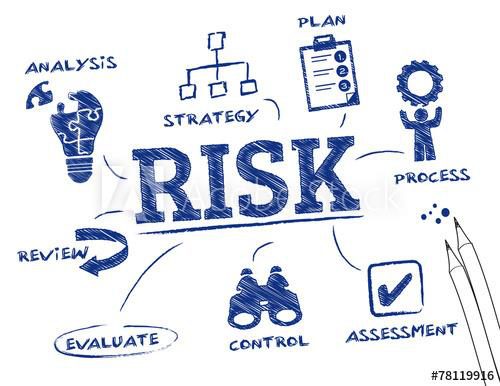
2. What are the major risks in the procurement process?
Disruptions in supply, in the performance of services, in the execution of works, or in the price, cost / quality ratio and/or the use of (supply of) non-original materials
3. What are the policies in Procurement?
The right price, in the right place and at the right time, the right quality and quantity!
4. How do we measure performance in procurement?
By reducing the contracting authority’s costs (through the judicious application of procedures) (time / supply cycle, no storage …)
5. Are employees specialised, do they have the necessary competences (not the diplomas)?
Send employees from all departments connected to procurement: administrative, audit, accounting, financial, investment, technical, urban planning, etc. to the courses / seminars / workshops organised by our Consortium – to acquire Competences!
6. Is there a contracting strategy for each category of product / service / work at unit level?
Every department must cooperate with and help the Procurement Department
7. Does the Procurement Department (do the other departments) have a formal process for market analysis, marketing?
A key element in the preparation stage of the procurement process is the collection, organisation, interpretation and correct application of information about costs and market players
8. Does the Procurement Department have the flexibility not to limit itself to price savings?
It must take into account the total life cycle / the Total Cost of the purchase
9. How are the requirements of the procurement established?
In the requesting department (it may work with the procurement specialist or may call on external experts – design, works, complex goods, specialised ancillary services)
10. Which parts of Information Technology does Procurement use?
An electronic procurement system, other cost-tracking methods, a contract management system, a commodity exchange for fungible goods
11. Does the Procurement Department keep a record of all the contracting authority’s purchases?
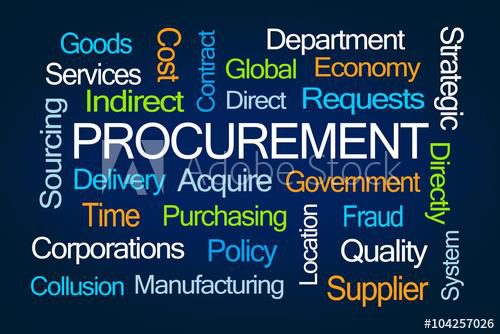
Collaboration with the other departments through an integrated electronic system that flags all approved order notes, approved orders, payment authorisations, etc.
12. Does the Procurement Department have ready-to-fill templates?
It is easier to have ready-made forms, adapted to requirements already known to all suppliers/contractors, which you can use at the right time
13. If there are stocks of raw materials and materials, is everyone aware of them?
The need for all departments to cooperate and collaborate with the procurement department, so that each department is supplied correctly, is clear and unequivocal
Procurement Strategy
The logical stages for selecting processes in the procurement strategy:
- Analysis of requests
- Choice of the buyer
- Considering the non-purchase option
- Considering the indirect purchase option
- Choice of method
- Choice of type of competition
- Drawing up the contract
The logical stages for selecting processes in the procurement strategy
Analysis of requests
- the nature and specifications of the request
- the expected value
- identification of crucial information (urgency, mandatory criteria to be met, completion time)
- elimination of brand requests
- double-checking of technical requests so that any E.O. can enter the competition
- determination of the other non-technical factors that will be requested
- checking whether there are other requests of this kind that can be grouped together
Choice of the buyer
- Top Management, through its authority, will determine and delegate who is responsible for the request and will follow the procurement
- the specific nature of each department will be taken into account (procurement, financial, accounting, human resources, investment, technical, administrative, urban planning, social services, cadastre, etc.).
Considering the non-purchase option
- in-house production, using own resources (software built and designed by the IT specialist instead of outsourcing the service)
- leasing – all related costs will be taken into account: installation, maintenance, warranties, residual cost,
- incorporation into another procedure
- “apples” will be compared with “apples”
- the present value will be compared for each case
| Option 1: | Leasing | Option 2: | Purchase |
|---|---|---|---|
| Time | 5 years | Purchase price | $10,750 |
| Monthly rate | $170 | Maintenance (400/year) | $2,000 |
| Warranty | 0 | ||
| Transport | $150 | ||
| Residual value | ($1,500) | ||
| Total leasing cost | $10,200 | Total Cost | $11,400 |
Considering the indirect purchase option
- the existence of a long-term arrangement (framework agreement, dynamic purchasing, contractual conditions), generally based on the existence of previous results following the application of procedures.
- they may refer to the existence of contractual conditions such as: price, discounts, supply, packaging and other terms depending on the specific nature of the procurement in question (for certain preselected P; S;), over a period of time and in a certain quantity.
Choice of method
- Depending on the estimated value and the possibility of drawing up the technical specifications and the financial framework, one will choose:
- direct purchase, market consultation, a procedure, a framework agreement, a dynamic system
Choice of type of competition
- open competition (anyone can take part); or
- limited, restricted competition
- it depends on the market structure (open or restricted procedure), on financial constraints (framework agreement), on whether solutions not existing on the market are sought (innovation partnership), on whether technical specifications cannot be successfully defined and design solutions are sought (negotiation / competitive dialogue), on the existence of extreme urgency, the purchase of a work of art, additional or new quantities (negotiation – without prior publication of a contract notice), design contest.
Drawing up the contract
- the invoice is sufficient
- the order note
- P, S, W contract
- Fixed price, price based on bills of quantities
- other contractual conditions
S.A.A.P. and P.A.A.P.
The Annual Strategy
As information for drawing up the S.A.A.P. (Annual Public Procurement Strategy), the contracting authority uses at least the following estimated elements:
- the needs identified at C.A. level as needing to be satisfied as a result of a procurement process, as they emerge from the requests sent by all departments within the C.A.;
- the estimated value of the procurement corresponding to each need;
- the professional capacity existing at C.A. level for running a process that ensures the anticipated benefits;
- the resources existing at C.A. level and the need for additional external resources that can be allocated to running public procurement processes.
The Annual Programme
Within the annual public procurement strategy, the contracting authority is obliged to draw up the annual public procurement programme (P.A.A.P.), as a management tool used for planning and monitoring the portfolio of procurement processes at contracting authority level, for:
- planning the resources needed to run the processes; and
- checking how the objectives of the local/regional/national development strategy are being met, where applicable. The contracting authority, through its internal department specialised in procurement, is obliged to keep a record of direct purchases of products, services and works, as part of the annual public procurement strategy.
If the contracting authority implements projects financed from non-reimbursable funds and/or research – development projects, it is obliged to draw up, for each project, a public procurement programme for that project. The C.A. is obliged to publish in SEAP extracts from the P.A.A.P. concerning: a) contracts/framework agreements for products and/or services whose estimated value is greater than or equal to the thresholds laid down in art. 7 para. (1) of Law no. 98/2016; b) contracts/framework agreements for works.
Prof. Gabriela ILIN
Public Procurement Specialist and Expert
Dipl. Eng. Ovidiu SLIMAC
Public Procurement Specialist and Expert
Reference
Ilin, G., & Slimac, O. (2018, June). Lideri în achiziții [Leaders in procurement]. Revista de Achiziții Publice, (129).
Editorial note
Published materials express the opinions and analyses of the authors who sign them and do not necessarily represent the position of Achiziții Corecte / Correct Procurement. Each author is responsible, in accordance with the law, for the content of their own contribution, including the statements made, the accuracy of information, the identification of sources, and respect for third-party rights. Publishing or making a material available does not constitute adoption or validation of all its opinions and conclusions. The materials are for information purposes and do not replace advice tailored to a particular situation. This note does not exclude liabilities that cannot be excluded by law.


You must be logged in to post a comment.