← Academia · Versiunea în română
Translated from Romanian by Achiziții Corecte. The Romanian text is the reference version.
In the beginning was … the direct purchase
To Buy – Direct buying – Direct purchase
Yes. I am a man, a human being, and surely it is as the scientists say (which science? – oh, come on now!): I do this buying activity emotionally.
I want a need of my own, or of my family, or of belonging to a group (a social one, with the same interests) satisfied, so I buy, purchase, prospect the market to obtain the best price for that need.
Obviously I will follow some steps, a procedure; I do not venture to go shopping without knowing: what I want to buy, what budget I have allocated, what colour it should be, what I want organoleptically, other small details of this kind such as: quantity, quality, whether I can carry all these products by myself, whether I need transport …
Hmm … I realise why you notice many male bipeds, very attentive to the little piece of paper in front of them and with bulging eyes fixed on the shelves where the price is displayed; they also have a divided attention to pushing the trolley through the shop (apparently, according to the same scientists – which ones? the others than the first, or maybe the same ones … – such a thing would be downright impossible, men being mono-tasking – doing one thing at a time – whereas women are multi-tasking – able to do more than two activities simultaneously, and yes, I will not try to digress here) and to the mobile phone they carry, on which they are talking at the same time – waiting obediently for the purchase to be approved.
What do you mean, by whom? By the hierarchical Boss, of the family, of the group into which he was accepted) – By the one at the other end of the phone.

What do we distinguish here:

- I had a need which I defined (I want to buy salami, I was told that if they have eggs I should take ten, so I arrived at headquarters with 10 sticks … of salami!);
- I know what budget I have (no more than I have in my wallet, for all the 13, 26, 39 items I set out to purchase;
- I know the qualities that satisfy my needs (the beer should be cold, the cheese mouldy, the wine old, the meat tender, the fish alive, the eggs “organic”);
- I prospected the market, admittedly in just one shop, but I also took a look around the virtual shops, such as hypermarkets and supermarkets (shops with everything that sell both wholesale and retail, so to speak), and I calculated mentally (I am an engineer, for heaven’s sake) how much would have to be added to the procurement cost – the transport;
- of the similar products with the same use, generically known as biscuits, I did not choose the cheapest ones, called “Popular”, but some slightly more expensive ones with a special taste, a guarantee 6.28 times greater than the others;
- I phoned home (headquarters) to present the offers as correctly and accurately as possible, we took the decision on what we would acquire (buy) and I headed for the place where the supplies are paid for;
- I paid, after checking that the receipt showed the correct data (quantity, unit price, date, etc.), and I headed for the warranty counter where the warranty documents for the electronic device I had purchased were drawn up for me;
- because I was likeable – like hell; rather because all the goods cost more than the threshold set by the supplier, for which it had shown its willingness to transport my things home free of charge to headquarters, home (as the advertisements also said), and I paid with the “Miracle” card – the transport was free; in fact it was not free, but its cost was included in the overall payment (sic!);
- I also received some bonus points (100 point units = one monetary unit), which I will use at the end of the year;
- I closely followed the taste of the food (no complaints); I took the electronic gadget (device) back to the shop and received another one, thanks to the warranty, for the whole period of the repairs needed for it to work within the agreed terms;
- I will repeat this cycle, perhaps not with the same shop (oh, of course I will), but following the same methodology, which did not fail and which brought me added value.
Ouau / Wow
So how do the people from the state do it?
Public Procurement
What?
- The process by which products, services and/or works are obtained in accordance with the legislation in force;
How?
- Through award procedures: the stages that must be followed by the Contracting Authority and by the candidates/tenderers so that the agreement of the parties in the procurement contract is considered valid
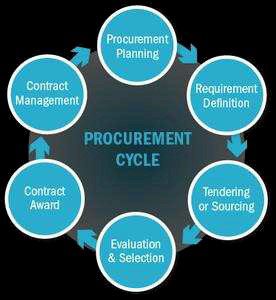
The public procurement process unfolds as follows: Planning of the purchase, Application of the (internal) procurement procedure, Award (signing) of the contract, Implementation, Monitoring of the contract.
So, let us start from the beginning
(I heard a little story told by a police officer who, while on duty at an accident, tries to question the witness at the scene, and the witness hurriedly starts telling him how he got dressed, who was at the wheel, when the traffic light changed colour, why he was in the street at that hour and in that place … unstoppable, in an avalanche of words, hisses and whispers, his voice in a continuous tremolo.
At this point the officer asks him, in a calm tone appropriate to the situation, to take a deep breath, calm down a little and then tell everything from the beginning.
- from the beginning?
- yes, tell it from the beginning, everything as it happened.
- all right then: In the beginning was the Word, and the Word was with God, and the Word was God. The same was in the beginning with God. All things were made by Him; and without Him was not any thing made that was made. In Him was life; and the life was the light of men. And the light shineth in darkness; and the darkness comprehended it not.)

So:
1. A statement of need (referat de necesitate) setting out the needs of the contracting authority – drawn up by whoever has that need: the technical department, for technical equipment; urban planning, for feasibility studies and technical designs; the administrative department, for current expenses such as telephone, internet, stationery and office supplies; the finance department, for specialised software; subordinate units, for fixed assets and the investments they want; the emergency services, for the fire engine; the agricultural officer, for cadastral services; procurement, for consultancy and training, etc.
2. The statement of need contains the technical specifications wanted by the initiator of the purchase, who knows best what the characteristics of the requested need are.
3. In the case of services or works, in consultation with the legal department, a draft contract may also be drawn up with those few essential elements of the contract: (unit) price, value, quantity, delivery or execution deadline, guarantees, penalties, etc.
4. The estimated value of the purchase (excluding VAT1) and, possibly in collaboration with the C.A.P.2, its classification in the C.P.V.3 The estimated value must be lower than the thresholds of:
- 270,120.00 lei for products and services
- 900,400.00 lei for works
5. Approval of the statement of need.
6. Budget allocation for that direct purchase.
7. Inclusion in the Annex to the P.A.A.P.4, the direct purchase not being a procedure.
8. Depending on the (non-)existence of an internal procedure, the person designated to carry out that purchase takes up their duties.
9. If that person is not part of the Public Procurement Department (C.A.P.), they will inform both the finance department and the C.A.P. of that purchase, so that it is recorded in the relevant registers.
Note: Even though the direct purchase (buying) is not a procedure in itself, the contracting authority may initiate a non-exhaustive market consultation for technical, financial or contractual solutions, with the possibility of requesting alternative offers, by publishing a consultation notice in S.I.C.A.P., as well as by any other means.
10. The C.A.5 has the right to pay directly, without prior acceptance of an offer, when the estimated value of the purchase is less than 9,000.00 lei, excluding VAT.
11. The C.A. has the right to purchase on the basis of a single offer if the E.V.6, excluding VAT, is less than or equal to 140,000.00 lei for products and services, and 300,000.00 lei for works, respectively.
12. The C.A. is obliged to consult at least 3 economic operators if the E.V., excluding VAT, is greater than 140,000.00 lei for products and services, and 300,000.00 lei for works, respectively, but less than or equal to 200,000.00 lei for P7 and S8; and 560,000.00 lei for W9, respectively;
- if it receives only one eligible10 offer, the purchase may be carried out.
13. The D.P.11 must consult the electronic Catalogue in SICAP12, http://www.e-licitatie.ro, if the E.V., obviously excluding VAT, is greater than 200,000.00 lei for P and S, and 560,000.00 lei for W, respectively, but lower than the thresholds of:
- 270,120.00 lei for products and services
- 900,400.00 lei for works.
14. If they find there what they want to purchase, the D.P.:
- Initiates the purchasing process;
- Requests information from the economic operator and/or other necessary details: identification data of the requested products, services or works, requirements regarding delivery, provision or execution; payment terms;
- Imposes specific conditions (where applicable, transport to the premises, guarantee conditions, quality conditions, etc.);
- Waits at least 2 days for its reply, of acceptance or non-acceptance;
- If the C.A.’s conditions are accepted, the economic operator sends its firm offer for supplying the products, providing the services or executing the works in question;
- Within a maximum of 5 days, the C.A. gives its acceptance or,
- fills in the reason for rejecting the offer, or takes no decision, in which case the process will close and the purchase remains unawarded.
15. If they do not find what they want in the electronic Catalogue, or the prices are unacceptable to the contracting authority (either the P, S, W do not meet the desired quality, environmental, etc. requirements, or they exceed the maximum value the C.A. can make available for that purchase), or, for technical reasons attributable to S.I.C.A.P., access to the electronic Catalogue is not possible, then the D.P. will draw up a justification note to that effect
- A screenshot from the dedicated portal
- A brief description of the situation – I checked on 10 May 2023 –
(on Independence Day: “On 9 (O.S.)/21 May (N.S.) 1877, Mihail Kogălniceanu proclaimed the independence of Romania. The next day, 10 (O.S.)/22 May (N.S.), the act acquired the force of law through its signing by Prince Carol I.” Wikipedia, of the Monarchy – according to some, on 10 May 1866, with the unanimous votes of the deputies in the Chamber of Deputies, the Prussian prince (of Hohenzollern) was elected ruler of the United Principalities (which since 1862 had borne the name of Romania). From this moment the reign of Carol I begins. Proclaimed ruler of Romania on 10/22 May 1866, he kept this title until 14 March 1881, when he was proclaimed king, thus becoming the first king of Romania. He was the first monarch of the Hohenzollern-Sigmaringen dynasty, whose name was transformed, starting with King Ferdinand I, into the Royal House of Romania, a dynasty that would rule the country until the proclamation of the Romanian People’s Republic in 1947″ end of the quotation from Wikipedia)
- The electronic Catalogue, where I found only unacceptable offers – higher prices, unacceptable quality)
16. The electronic system should also know, even 5 years later, that on that date the firms “Abc” and “Xyz” had the “following” price offers for the products, services and works in question.
17. The expenditure for the purchase is legally committed through:
- A fiscal document
- An order
- A payment instrument that allows its holder to use it in relation to merchants to make cashless payments for the purchase of products, services and/or works via a terminal, such as, but not limited to:
- Payment card
- Electronic wallet
- Contract
18. The person who requested the purchase will also monitor the progress of that purchase (they will be part of the acceptance committee at the level of the unit, for recording the products, services or works in question) and will draw up the Contract Performance Report (for that purchase) with a view to placing the Supplier, Service Provider or Contractor concerned in the Purchaser’s “White or Black Book”.
Summary
“Direct buying” is done when: the estimated value of the purchase, excluding VAT, is lower than the value thresholds provided for in art. 7 para. (5) of Law 98/2016
< 270,120 lei products / services; < 900,400 lei works.

- Via the electronic catalogue published in S.I.C.A.P., for products, services or works
- Within 2 days of receiving the notification, the E.O.13 is obliged to send through SEAP its acceptance or non-acceptance of the conditions imposed by the C.A.
- Failure to send a reply within the 2-day period is equivalent to non-acceptance of the conditions imposed by the C.A.
- If the E.O. accepts the conditions imposed by the C.A., it will send through S.I.C.A.P. its firm offer for supplying the products, providing the services or executing the works.
- The C.A. will communicate through S.I.C.A.P. whether it accepts the firm offer, within no more than 5 days of the date on which the E.O. sent the firm offer.
- If it takes no decision, the process will end and/or, if it does not accept the offer, it will state in writing the reason(s) for rejection, and the purchase will remain unawarded.
- It is also possible to buy after requesting at least 3 offers, and the purchase may be completed even if only one offer is received.
- It is possible to buy directly, including on the basis of a single offer.
- It is even possible to pay directly, without prior acceptance of an offer. All three of these statements are subject to terms and conditions laid down in the specialised legislation, as presented above and specified in the sources used.
Sources: Primary and secondary (Classic) Public Procurement legislation, Law 98/2016, Government Decision (H.G.) 395/2016, C.A. User Manual – S.I.C.A.P., Wikipedia, Photos and diagrams – Internet.
Dipl. Eng. Ovidiu SLIMAC
Public Procurement Specialist and Expert
Notes
- 1 Value Added Tax ↩
- 2 The Public Procurement Department (Adviser) ↩
- 3 Common Procurement Vocabulary ↩
- 4 The Annual Public Procurement Programme ↩
- 5 Contracting Authority; we are talking only about “classic” procurement, under Law 98/2016 ↩
- 6 The Estimated Value of the purchase ↩
- 7 Products ↩
- 8 Services ↩
- 9 Works ↩
- 10 Valid in terms of the requested requirements ↩
- 11 The Designated Person ↩
- 12 The Collaborative Information System for a high-performance Public Procurement environment ↩
- 13 Economic Operator ↩
Reference
Slimac, O. (n.d.). Achizițiile directe – Îndrumător practic(at) [Direct purchases – A practical guide, updated edition].
Editorial note
Published materials express the opinions and analyses of the authors who sign them and do not necessarily represent the position of Achiziții Corecte / Correct Procurement. Each author is responsible, in accordance with the law, for the content of their own contribution, including the statements made, the accuracy of information, the identification of sources, and respect for third-party rights. Publishing or making a material available does not constitute adoption or validation of all its opinions and conclusions. The materials are for information purposes and do not replace advice tailored to a particular situation. This note does not exclude liabilities that cannot be excluded by law.


You must be logged in to post a comment.